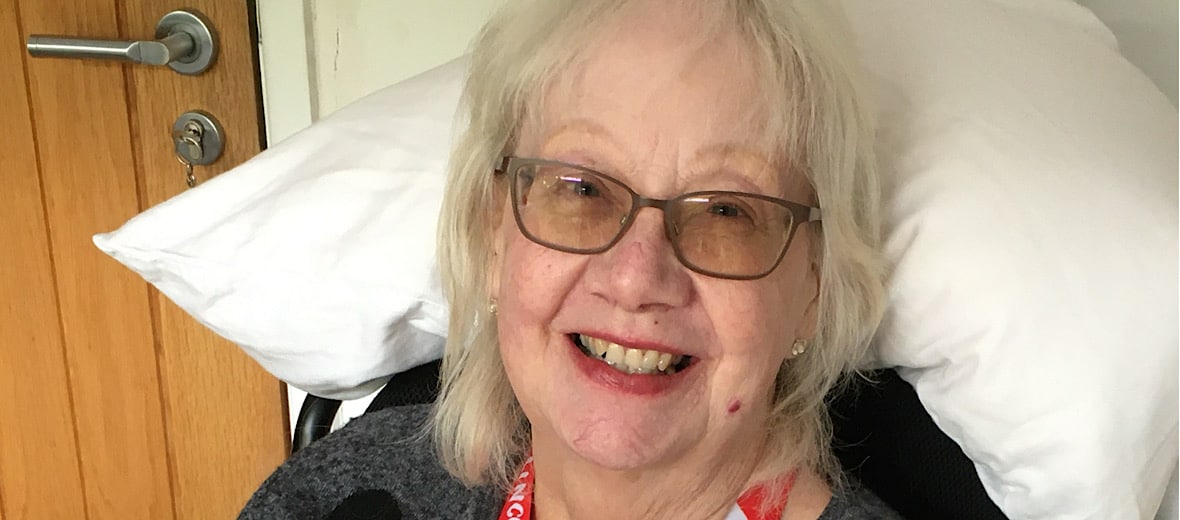
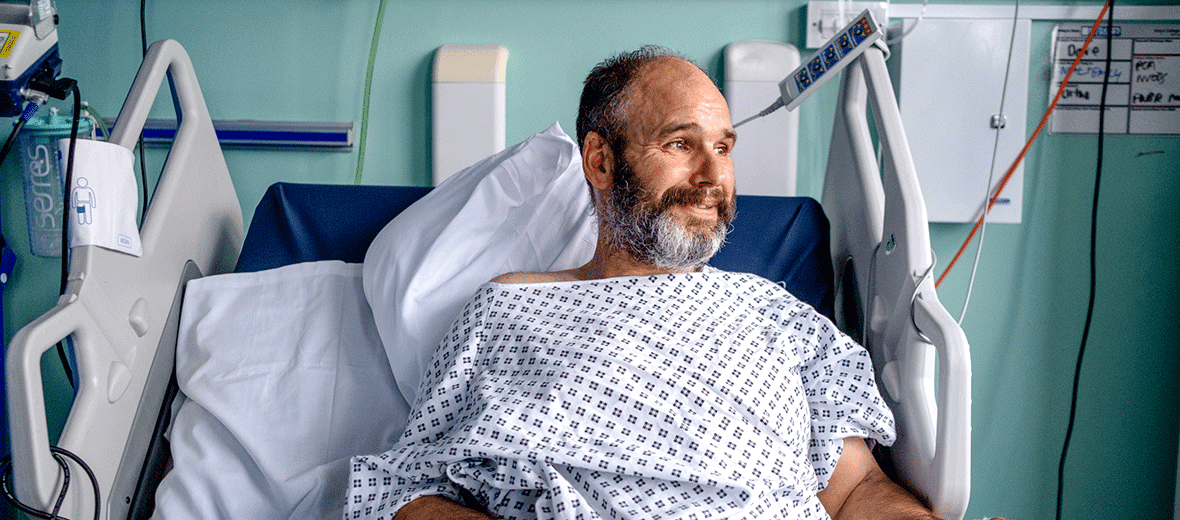
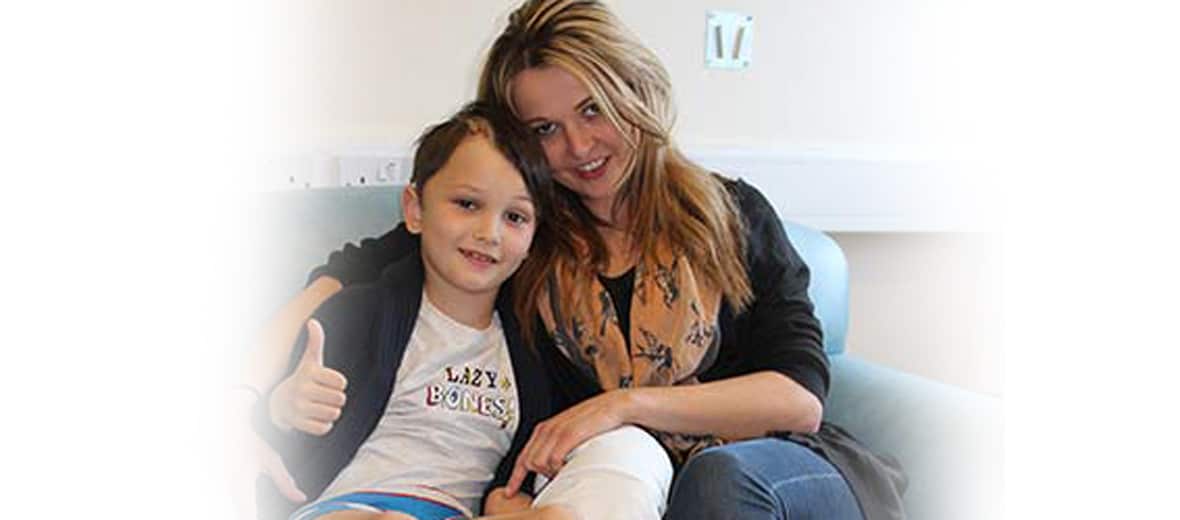
Joyce Metcalfe was one of the first patients to use the Robert Black Memorial Helipad at Campbeltown Hospital, which cost £270,000 to build and was funded entirely by the HELP Appeal. She was airlifted from Campbeltown to the helipad at Queen Elizabeth University Hospital in Glasgow, which was also funded by the HELP Appeal.
Joyce takes up her story:
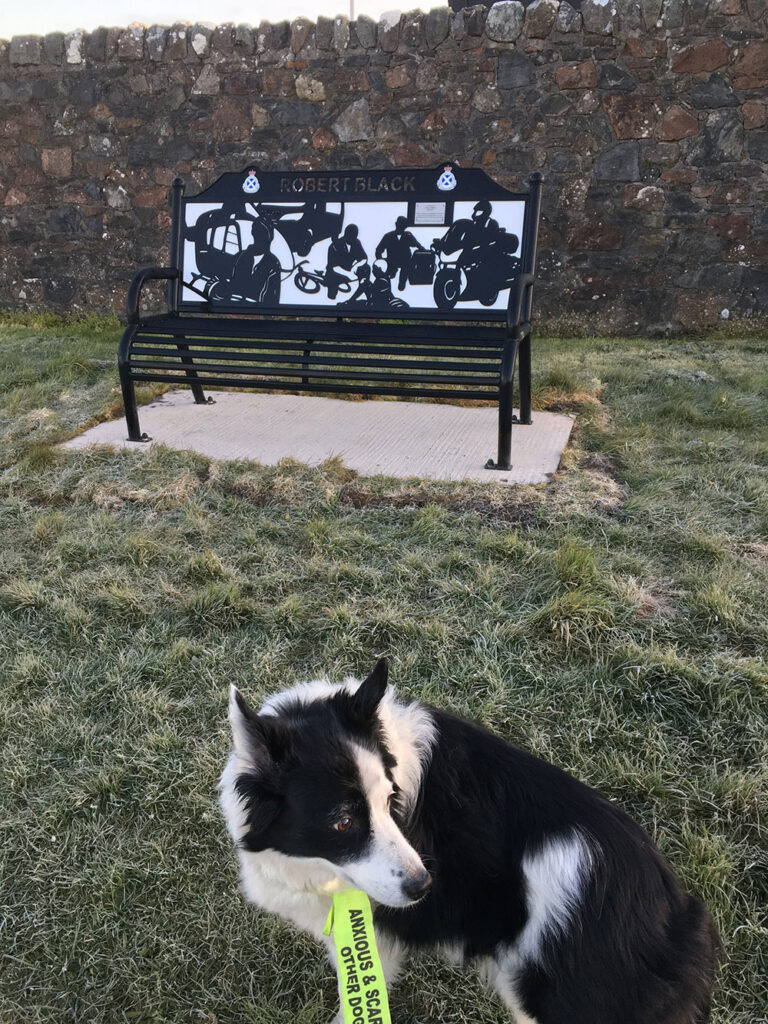
“I was walking my dog and as it was such a nice morning I decided to walk a bit further than normal and ironically I thought I’d look at the Robert Black Memorial Helipad and memorial bench. It was a frosty morning so as I was walking away, I unfortunately slipped on the grass and fell.
“My sister dropped me off at Campbeltown Hospital’s Emergency Department, where I had an X-ray, which confirmed that I had broken my left ankle and fibula.
“As there were no road ambulances available at the time, I got airlifted to the Queen Elizabeth University Hospital in Glasgow. The journey only took 30 minutes, as opposed to the 3 to 4 hours it would have taken by road, which could be fatal if someone was suffering from a heart attack, stroke or another life threatening condition or injury. My treatment at both hospitals was exceptional.
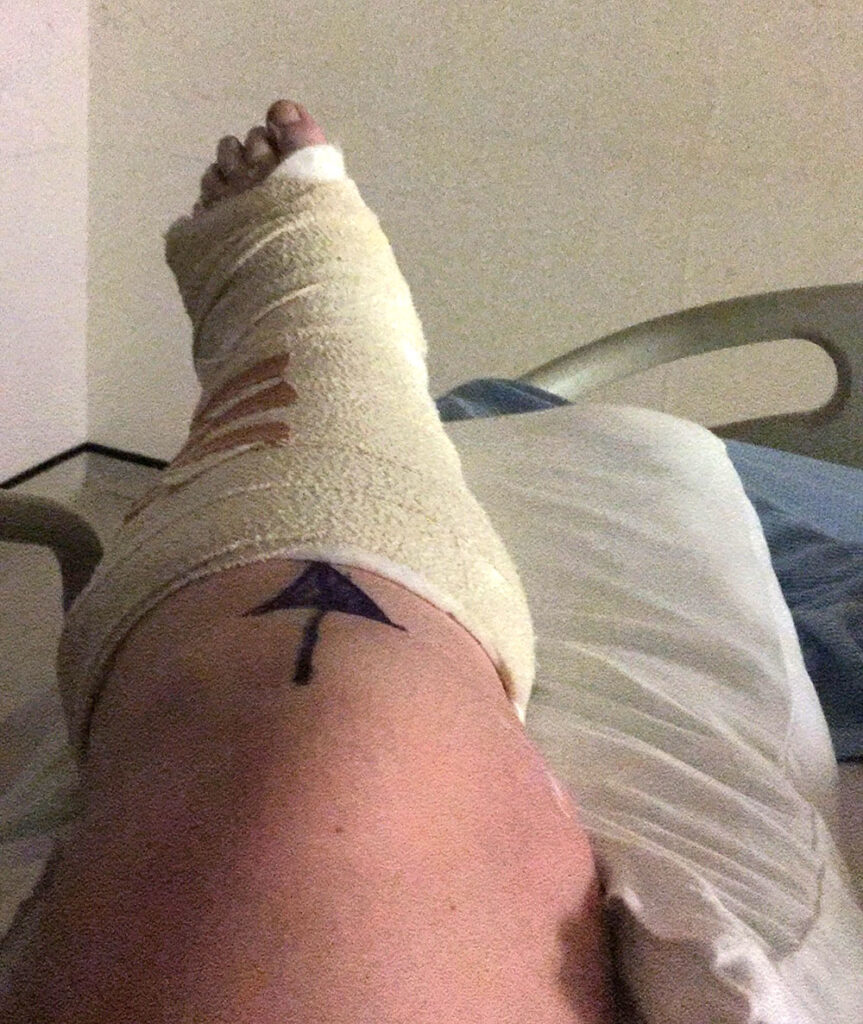
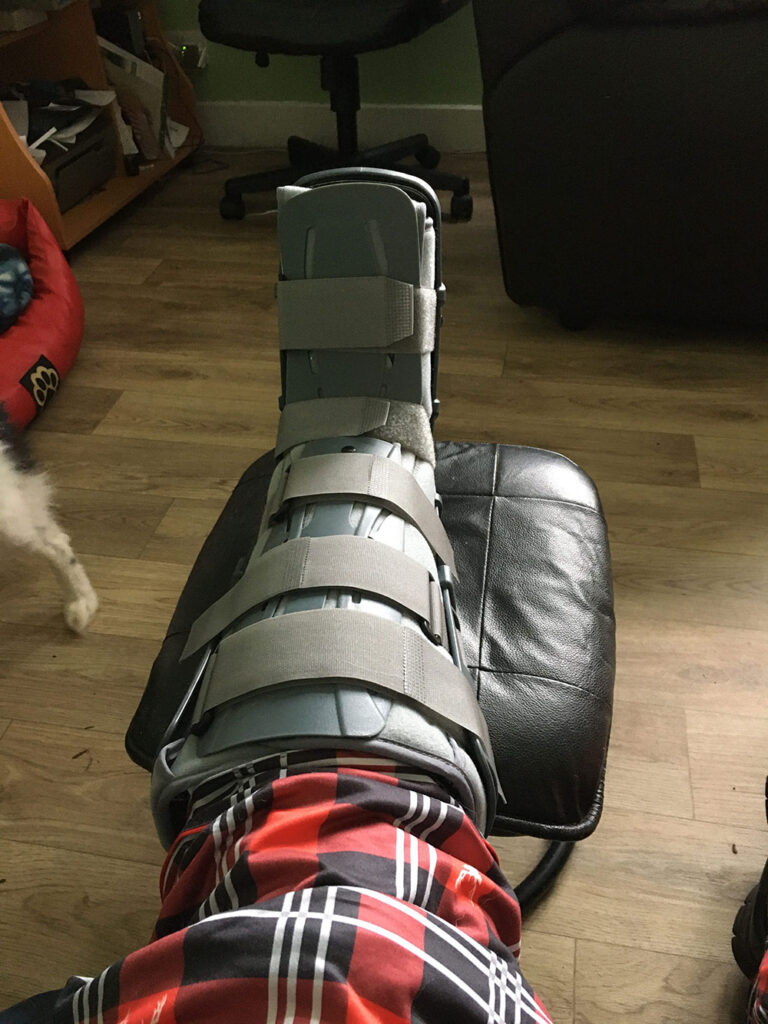
After my accident, I was bed bound and in a cast for six weeks and had to have extensive physio. However, 14 weeks on from my accident I am healing well.
The helipad will benefit Campbeltown residents immensely because it will be a lifesaver for many people. It’s also a wonderful tribute to Mr Black.”
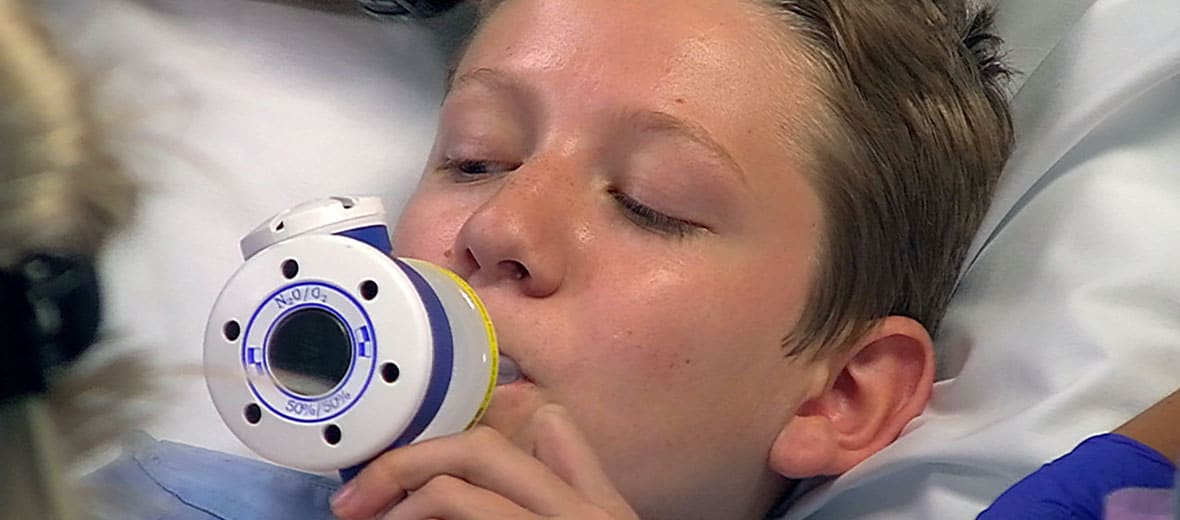
In the first two months of being operational, 19 patients were airlifted from Campeltown helipad, confirming how much the helipad is needed in the region. These patients required a variety of treatments including emergency scans, maternity interventions, orthopaedic surgical interventions and respiratory specialist treatment.
Before the helipad was built, air ambulances had to land on waterlogged, muddy conditions in a field beside the hospital, which made patient transfers extremely difficult. When Campbeltown Hospital patients needed to be transferred to other hospitals across Scotland during adverse weather conditions, a road ambulance had to transport the patient to an air ambulance at Campbeltown Airport, five miles away, which extended the transfer time and delayed treatment, particularly during out of hours, when additional time was required to open the airport for take offs and landings.
Campbeltown helipad is one of 11 HELP Appeal funded helipads in Scotland and one of 45 in the UK.