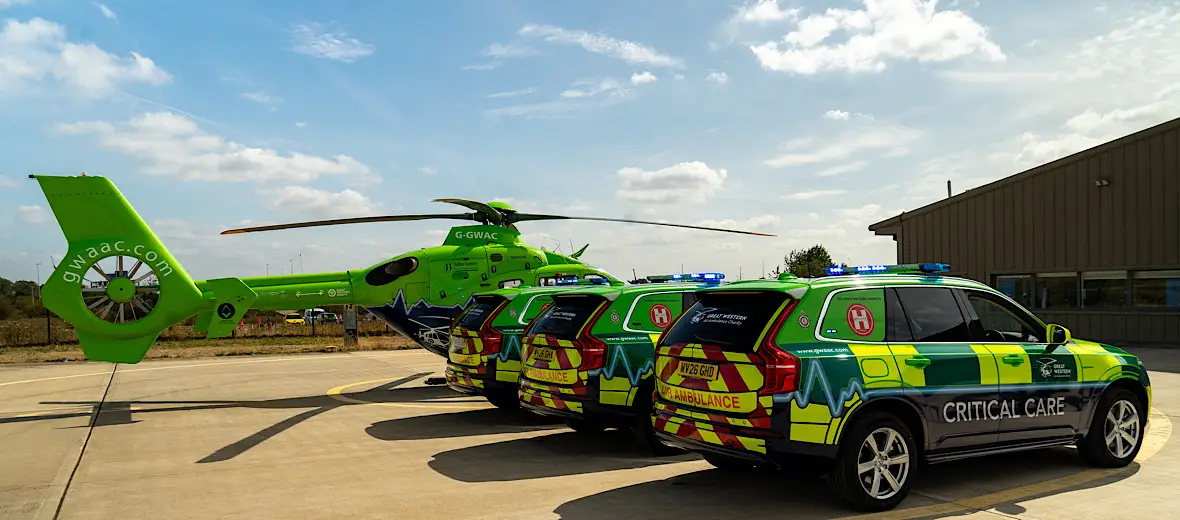
A fleet of three state-of-the-art rapid response vehicles has entered service today (25 August 2026), strengthening Great Western Air Ambulance Charity’s (GWAAC) ability to deliver lifesaving critical care by road, whatever the weather or terrain, alongside the charity’s helicopter.
GWAAC’s new cars are a significant investment in the charity’s operational capability. The three Volvo XC90s replace the charity’s older fleet of Skoda Kodiaqs that are nearing the end of their serviceable life. The new cars have been fitted to emergency response standards; ready to respond to people in urgent need across GWAAC’s region of Bristol, South Gloucestershire, Gloucestershire, Bath and North East Somerset, North Somerset and parts of Wiltshire.
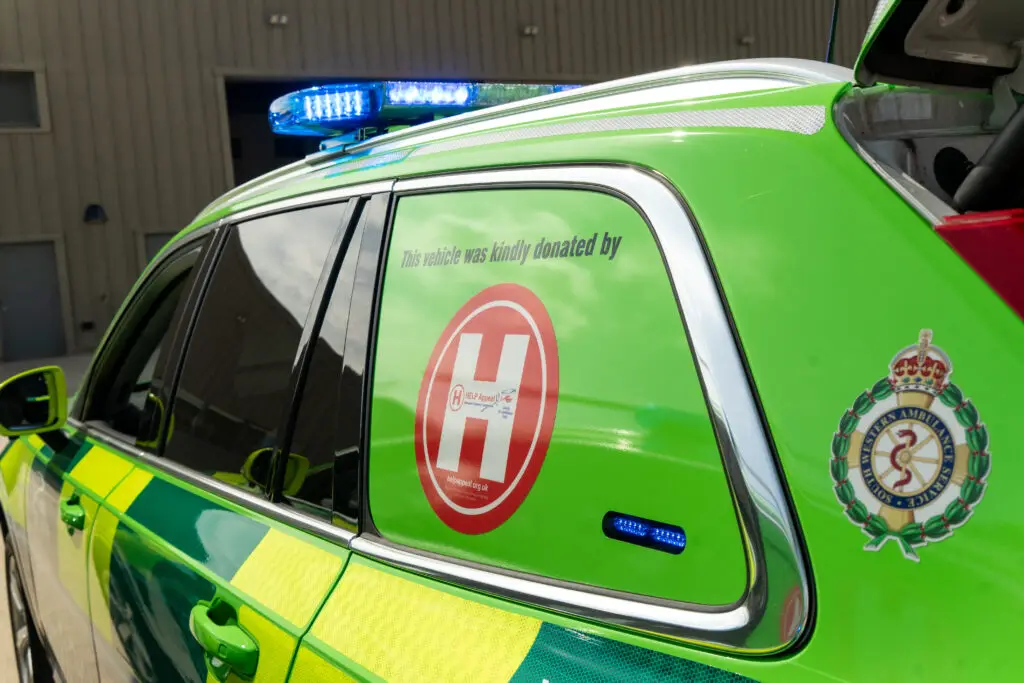
Funded by the HELP Appeal
The entire new fleet was generously funded by the HELP Appeal, which is also the only charity in the country dedicated to funding NHS Hospital helipads, including at Gloucester Royal Hospital, Bristol Royal Infirmary and Southmead Hospital With no day-to-day funding from the government or National Lottery, GWAAC is reliant on the generosity of individuals, community groups and businesses across its region. The grant from the HELP Appeal means the charity can continue to respond to more than six patients a day, delivering lifesaving care as quickly as possible.
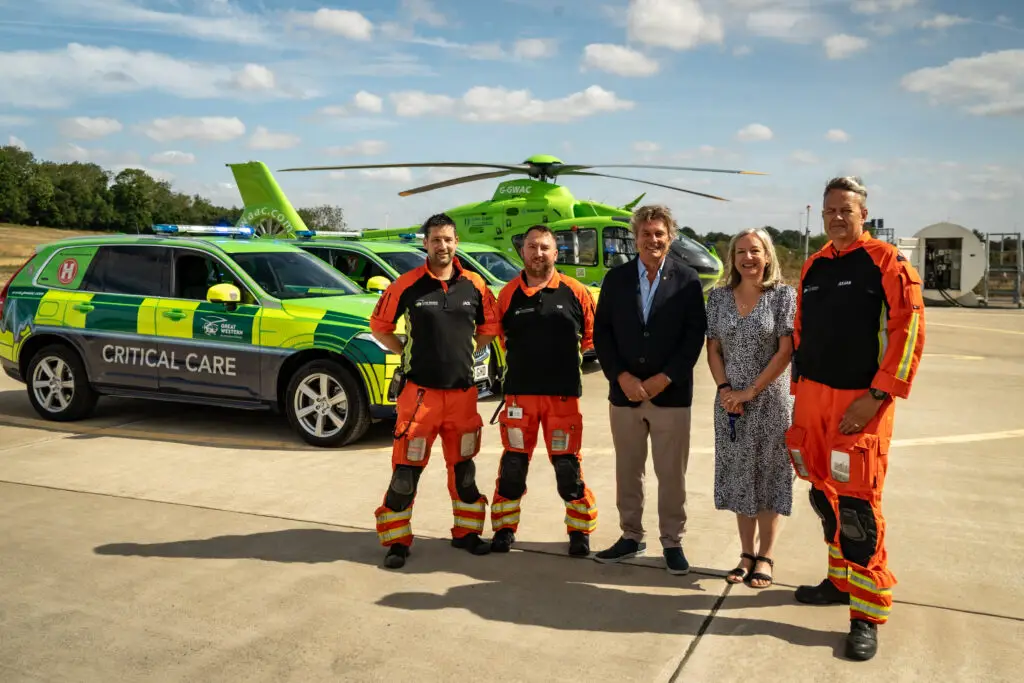
Robert Bertram, Chief Executive for the HELP Appeal, which helped to fund GWAAC’s airbase at Almondsbury and essential kitbags for its crew said:
“While the HELP Appeal is best known for funding lifesaving NHS hospital and air ambulance base helipads which are essential in emergency care, critical care cars are vital too. They enable specialist teams to reach patients quickly when helicopters cannot fly or when travelling by road is the fastest option. We are proud to fund these three state-of-the-art vehicles and sincerely thank our supporters, whose generosity is helping us to deliver lifesaving care in the region and beyond.”
Tim Ross Smith, Operations Officer for GWAAC, said:
“Our previous vehicles served us well but were becoming increasingly costly to maintain and more prone to issues as they reached the end of their operational life. We’re very grateful for the support of the HELP Appeal which has helped ensure our crew can continue reaching patients quickly to provide their exceptional level of care to people with life-threatening injuries and medical emergencies every single day.”
Clinical impact
GWAAC’s cars are vital for transporting its skilled crew and equipment to people needing pre-hospital critical care. Without them, some patients may not receive lifesaving treatment in time to give them the best possible chance of reaching hospital. Each vehicle carries the same emergency equipment as the helicopter, including a portable ventilator, a LUCAS Machine for automatic CPR, an Ultrasound device, blood products for patients suffering catastrophic haemorrhage, specialist kit for children and babies, and much more.
The new cars have three main benefits to the old fleet:
- Pre-designed for emergency work with features such as a slide-out tray in the boot, making it easier for the crew to access heavy medical equipment and kit bags
- Bigger boot space to accommodate GWAAC’s increasing amount of specialist equipment
- A more spacious interior for crew, medical equipment, bags, and PPE (personal protective equipment)
GWAAC’s Volvo XC90s are hybrid vehicles, enabling the charity to move away from diesel and towards a more sustainable fleet.
77% of call-outs are responded to by car
GWAAC’s airbase is well-positioned just outside Bristol in South Gloucestershire and close to two major motorways, meaning it is often quicker to travel by car than by helicopter.
In dense urban environments, or when weather prevents aircraft operations, the vehicles provide the fastest available route to getting a Critical Care Doctor and Advanced or Specialist Paramedic in Critical Care (SPCC) to a patient’s side.
Vehicle specification
Key specifications of the new fleet:
- Make and model: Volvo XC90 hybrid
- Fleet size: three emergency-ready critical care cars as standard (GWAAC has a fourth vehicle for rotating alongside its main fleet to ensure consistent coverage)
- Off-road capability: All-Wheel Drive performance
- Medical crew: Critical Care Doctor, two SPCCs and a Trainee per vehicle
- On-board kit: Blood products and kit bags holding vital equipment to deal with incidents ranging from serious head injuries to cardiac arrests to road traffic collisions
- Sirens: Rumbler siren so drivers feel the noise even when they can’t hear it
- Operational hours: 07:00 to 01:00 365 days a year (GWAAC’s helicopter is operational 07:00 to 19:00 summertime)
Photo credit: Adam Davis Photography